What Is Joint Wave? An Honest Look at Shockwave Therapy in Des Moines
Quick Summary
At Joint Wave, we use a non-invasive approach that applies acoustic sound waves and targeted vibration to tight or stressed joints and soft tissue. It is not an adjustment or massage. Sessions are quick, with no downtime, and a short consultation is the first step in deciding whether this approach makes sense for your situation.
What Joint Wave Is (and Isn't)
I am Dr. Chad Rohlfsen, a Gonstead chiropractor with nearly three decades in practice. Over the years, I have learned that pain deserves attention. It is often a messenger. It may be the body’s way of asking us to slow down, look closer, and become more aware of what is under stress.
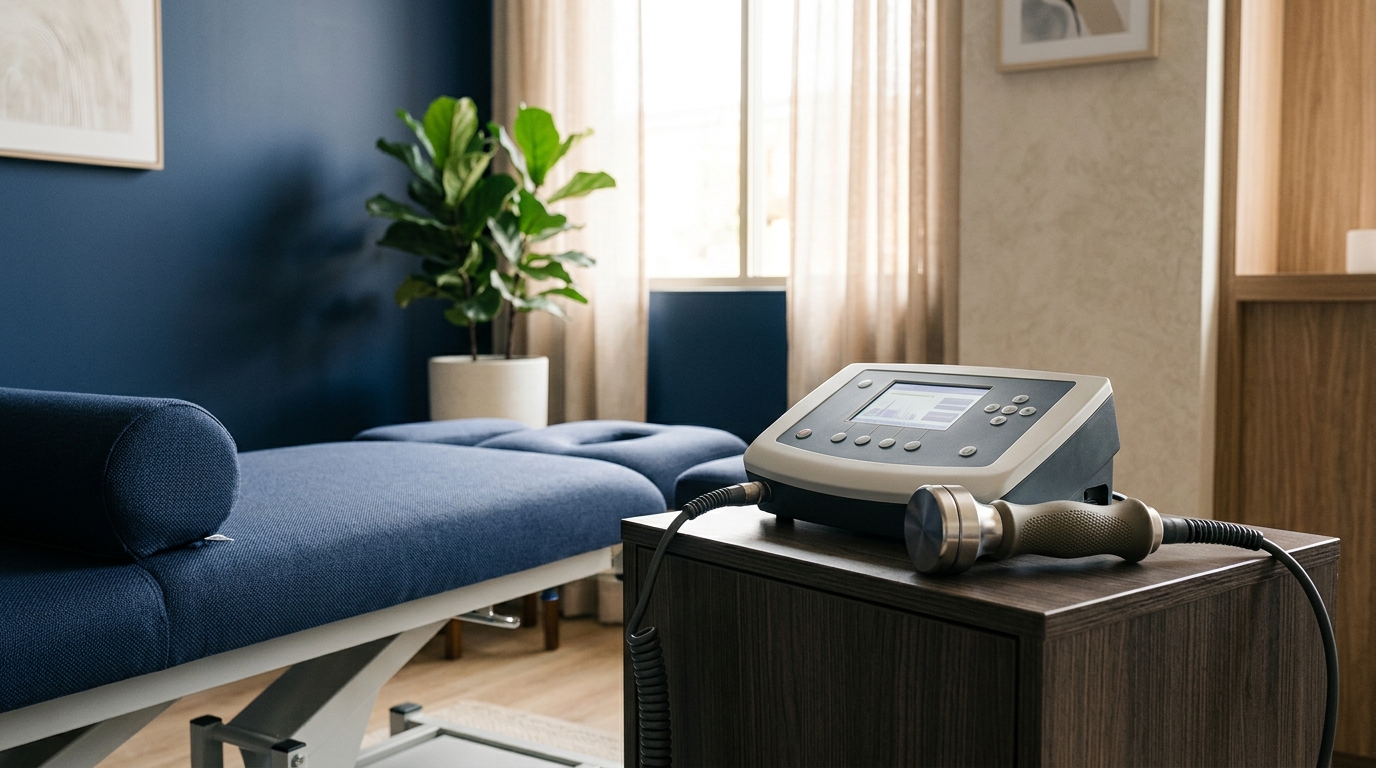
Shockwave therapy in Des Moines is one option some adults explore when a joint or surrounding soft tissue continues to feel tight, irritated, or limited. At Joint Wave Des Moines, we use a handheld device to direct acoustic sound waves into a focused area. These are mechanical waves, or pulses of energy, that move through the tissue. The sensation can vary based on the person and the area being treated.
What is shockwave therapy? In plain language, it is a non-invasive treatment approach that uses sound-wave energy and targeted vibration around an area of concern. It is not chiropractic adjustment. It is not massage. It is also not a substitute for a careful evaluation when a more urgent medical issue may be present.
The goal is not to force the body to do something. My approach is to listen to the person in front of me, consider the pattern they describe, and see whether Joint Wave may be a reasonable part of their next step. The body has a remarkable capacity to adapt. Sometimes it helps to give a stressed area focused attention while also staying curious about the larger picture.
If you would like more detail before coming in, our Joint Wave FAQ offers a helpful starting point.
What People Actually Feel
People often ask what a session feels like. That is a fair question, and the honest answer is that it varies.
Healthy tissue may feel like very little. Tight or irritated areas may be more noticeable. Some people describe a tapping, pulsing, or focused pressure sensation. Others notice that certain spots feel more sensitive than expected. That information can be useful. It may help us understand where the body is holding tension or responding to stress.
We can adjust the approach based on comfort and the area being addressed. I want people to feel informed throughout the process. There is no benefit in pretending every body responds in the same way.
Some people notice changes quickly. Others notice changes over several visits. Results vary from person to person.
A session is designed to be brief and practical. There is no downtime built into the visit, so many people return to their usual routines afterward. Still, how you feel after any session is worth paying attention to. Awareness is part of the process.
Who Tends to Look Into It
Adults often look into non-surgical joint pain relief in Des Moines because they are trying to make sense of ongoing discomfort. They may be dealing with knee, shoulder, hip, or foot discomfort that has lingered longer than expected.
Some have already tried rest, medication, or traditional approaches. Others are considering what to explore before injections or surgery. There is no single right path. Different people need different types of care at different times, and every provider or treatment has a role in the right setting.
I do not assume that discomfort in one place tells the entire story. For example, knee pain can sometimes involve patterns above or below the knee. Movement, load, prior injuries, work demands, and daily habits can all matter. You can read more about why the knee is rarely the real problem.
Joint Wave may appeal to someone who wants to have a thoughtful conversation before deciding what to do next. It may also appeal to someone who is simply curious about what their symptoms could be communicating. That curiosity matters. Pain is not always a clear map, but it can be a reason to look closer.
Who It May Not Be Right For
Not every concern should begin with shockwave therapy. A focused conversation helps us sort through that.
Acute injuries should be evaluated appropriately. If you suspect a fracture, have new numbness, experience unexplained swelling, or have a sudden and significant injury, physician evaluation is important. Those signs may call for a different type of assessment before considering Joint Wave.
The same is true when symptoms are unclear, severe, or changing quickly. It is important not to make assumptions based on a sore knee, shoulder, hip, or foot. The body can give overlapping signals, and a careful evaluation can help determine the right next step.
During a consultation, I will ask questions and listen to your history. If Joint Wave does not seem like a fit based on that conversation, I will say so. The purpose is not to place everyone into the same process. It is to understand the specific concern and consider options with care.
What a Consultation Looks Like
A Joint Wave consultation is under 30 minutes. We begin with an in-depth conversation about the specific problem you are experiencing. I want to know what you notice, when it began, what seems to affect it, what you have already tried, and what questions you still have.
This is a conversation, not a commitment. You can ask about the process, what a session may feel like, and whether this non-invasive approach may be worth exploring for you. We will also discuss payment options in person.
I believe people make better decisions when they feel heard. That is especially true when pain has become frustrating or confusing. We do not need to rush past the details. Often, the details help us see the pattern more clearly.
Joint Wave is located at 4685 Merle Hay Road, Suite 101, Des Moines, IA 50322. If you are curious about shockwave therapy in Des Moines, you can book a Joint Wave consultation at a time that works for you.
Pain is often a signal. It may not tell us everything on its own, but it can invite us to pay closer attention. The first step is understanding what is going on. If you would like to talk through your specific concern, schedule a consultation with Joint Wave or call (515) 727-4000.